Once upon a time, a brand specializing in one thing was enough. You could have a funny Twitter account, a unique TikTok presence, or a pretty Instagram and close the book on your social media plan. But those days are over.
The best in the business are building interconnected systems where every content piece they put into the world works together toward a common goal. This adjustment from content creation to content ecosystem development is what great marketing strategies have in common, and while social media is the natural starting point, it isn’t the entire gameplan.
The reality is that most brands are still operating in silos. They post on Instagram, publish blog articles, send newsletters, and create YouTube videos as if these are separate activities serving different purposes. But the most sophisticated content strategies recognize that these channels don’t exist in isolation, and treat them as part of a living, breathing ecosystem where content flows naturally from one platform to another.
This allows the effects of each new piece to build on the last, creating a clearer picture over time.
What Is a Content Ecosystem?
A content ecosystem is an interconnected network of content pieces, distribution channels, and audience touchpoints that work together to achieve specific business objectives. Unlike traditional content strategies that treat each piece as a standalone asset, an ecosystem approach requires in-depth understanding that content needs strategic thinking and cross-platform additions to drive performance.
Let me paint a picture: think of it like a natural ecosystem in biology. The same way that plants, animals, and microorganisms interact in complex ways to maintain life, your content pieces interact across platforms to maintain engagement, build authority, and spark conversions.
In other words, a single Instagram post doesn’t just live and die on Instagram. It can inspire Reddit discussions, fuel long-form blog content, or generate user-generated content that feeds back into the system.
The ecosystem model fundamentally changes how you think about content. Instead of measuring each post in isolation, you start tracking how content moves through your ecosystem, how it compounds over time, and how different pieces support each other. This is especially powerful when social media serves as the entry point, because social platforms offer the immediacy, engagement, and feedback loops that can inform and energize your entire content operation.
The Four Core Ecosystem Types
While every brand’s content ecosystem will be unique, most fall into four primary categories based on their strategic focus and business objectives:
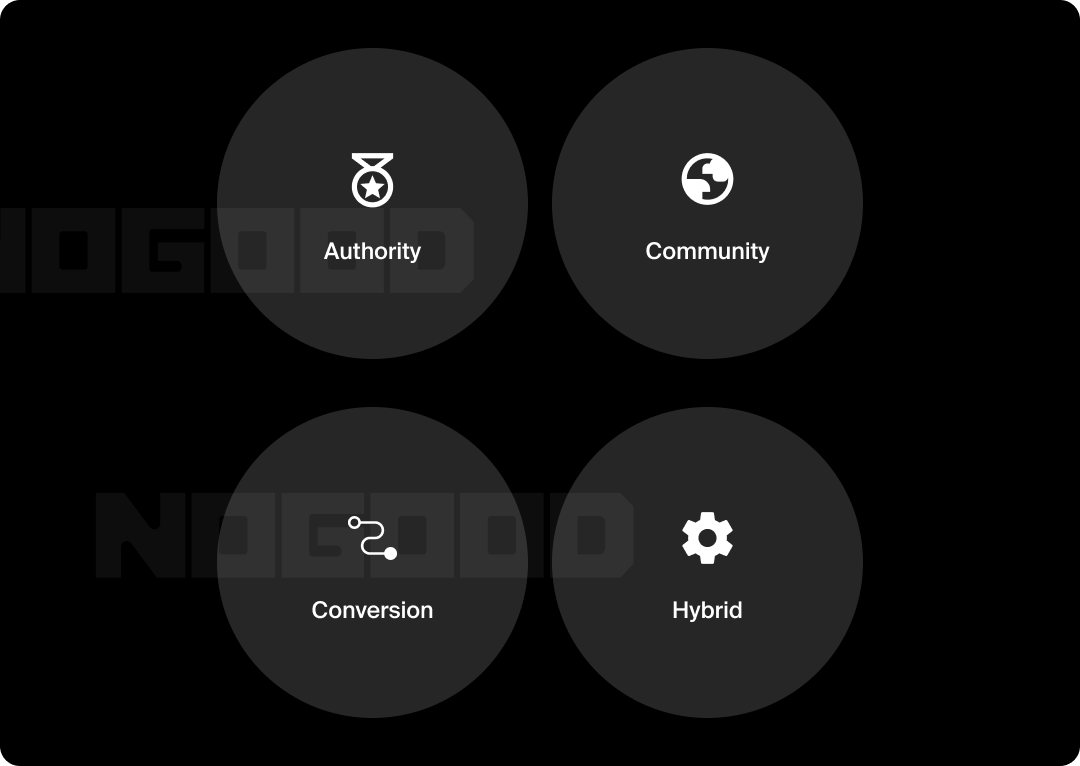
The Authority Ecosystem
The authority ecosystem centers on establishing thought leadership and expertise within a specific domain. This ecosystem type typically starts with insights, hot takes, or educational snippets on social platforms, then expands into comprehensive guides, research reports, speaking engagements, and industry publications.
The goal is to position the brand or individual as the go-to source for specific knowledge. You’ll recognize this ecosystem by its emphasis on depth, as well as a tendency to reference and build upon previous content. The focus is on cementing credibility as opposed to chasing quick conversions.
The Community Ecosystem
The community ecosystem prioritizes building and nurturing engaged audiences around shared values or interests. Social media is especially effective as the foundation here because platforms like Twitter, LinkedIn, and Instagram are built for conversation and connection.
This ecosystem includes user-generated content, community discussions, member spotlights, collaborative projects, and interactive content that strengthen the bonds between community members. Success metrics focus on engagement rates, member retention, and the strength of peer-to-peer connections rather than just follower counts.
The Conversion Ecosystem
The conversion ecosystem is designed to guide prospects through a clear customer journey from awareness to purchase. Content in this ecosystem is strategically mapped to different stages of the buying process. Social content creates awareness and captures attention, middle-funnel content educates and builds trust, and bottom-funnel content removes friction and encourages decisions.
Every piece has a clear role in moving people forward, and the connections between pieces are explicit and intentional.
The Hybrid Ecosystem
The hybrid ecosystem combines elements from multiple approaches, recognizing that most businesses need to serve several objectives simultaneously. This might mean building authority to attract an audience, nurturing that audience into a community, and strategically converting community members into customers.
The challenge with hybrid ecosystems is maintaining focus and ensuring that the different objectives don’t dilute each other. When executed well, hybrid ecosystems offer the most comprehensive approach to content strategy.
Why Build Your Ecosystem Starting With Social?
Using social media as your ecosystem foundation is a natural starting point. Social platforms offer immediate feedback, built-in distribution, and a lower barrier to entry than other content formats. You can test ideas quickly, see what resonates in real-time, and build from there.
Building up from social also reveals what your audience actually cares about, freeing you from having to guess or assume what they care about. The questions they are repeatedly searching for answers to, the content they bookmark and send to friends, and all of the other gaps in conversations surrounding your brand.
All of this insight develops into a more holistic understanding of your audience that informs your entire ecosystem strategy.
How to Build Your Content Ecosystem From Social First
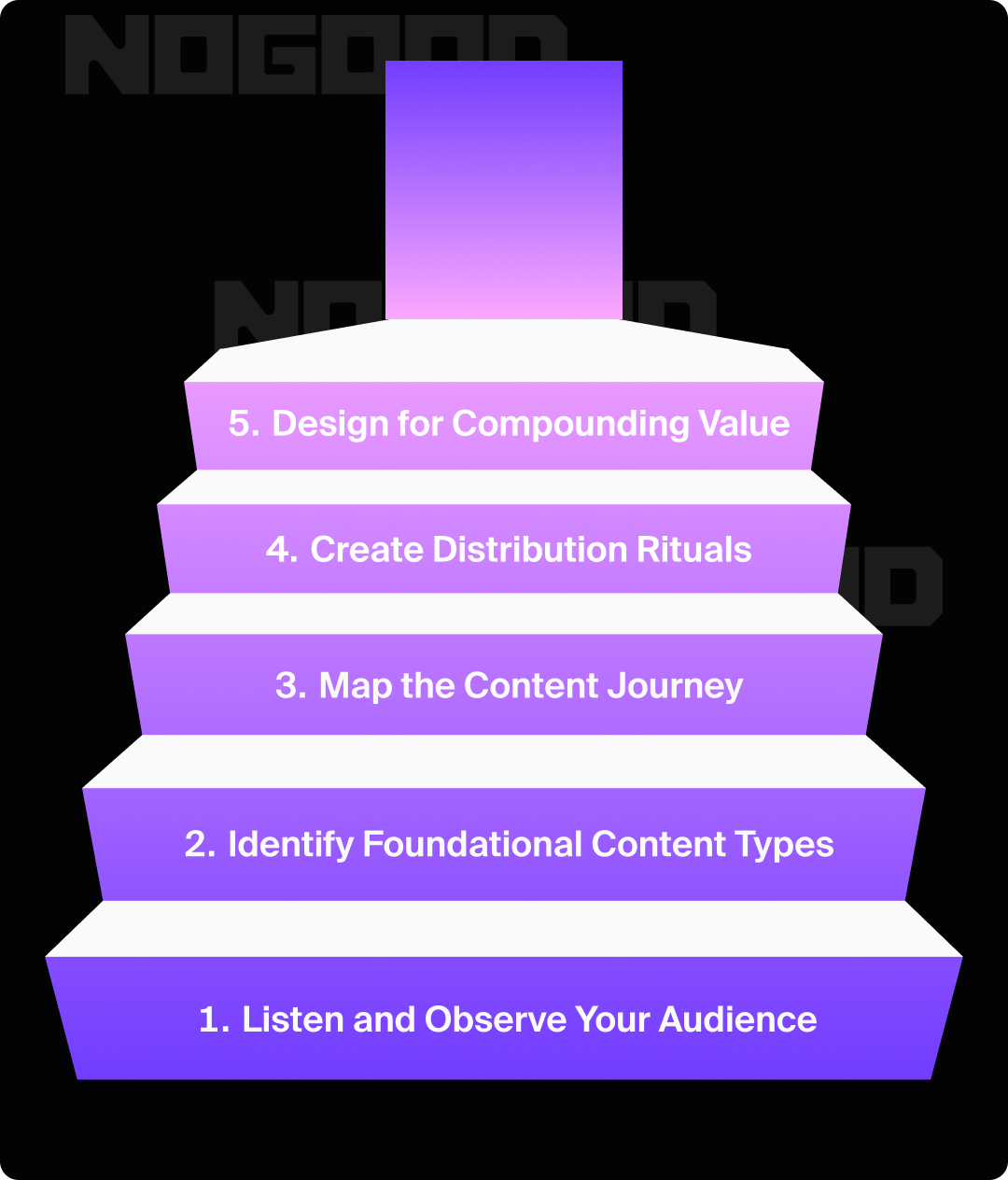
1. Listen & Observe Your Audience
Begin with strategic listening and observation: Like I mentioned above, you have to spend time understanding what resonates with your audience on social platforms:
- What questions loom large over your audience’s conversations?
- What content is getting bookmarked for later conversation?
- What empty space can you take advantage of in the current conversation?
2. Identify Foundational Content Types
Identify your content types; these are the cornerstone content formats that will anchor your ecosystem:
- If you’re building an authority ecosystem, your cornerstones might be thought leadership-focused LinkedIn breakdowns that get expanded into blog articles and newsletter issues.
- If you’re focused on community, your early focus may be conversation-starting questions or member spotlights on Instagram that generate discussion across multiple platforms.
Most importantly: choose formats you can consistently produce at high quality and that align with your strengths as a creator or brand.
3. Map the Content Journey
The next step is to map the content journey, or document how content will flow through your ecosystem. Let’s create an example for a typical flow:
- It might start with a provocative statement or question on Twitter that generates engagement and feedback.
- That engagement informs a more detailed LinkedIn walkthrough that speaks to the topic in more detail.
- The LinkedIn post can drive to the comprehensive blog article that includes data, examples, and actionable frameworks.
- That blog article can then be broken down into a newsletter series, short-form video content, and slide decks.
Each format serves a different audience preference and platform, but they’re all connected by a common thread: your research-supported insight into what your audience wants to know.
4. Create Distribution Rituals
An ecosystem only works if the content that you’re creating actually flows through it. Establish clear processes for how content moves from platform to platform. These rituals ensure your ecosystem stays active rather than becoming another theoretical framework that doesn’t translate to execution.
5. Design for Compounding Value
Every piece of content should be designed to increase the value of other pieces in your ecosystem. For some, this will look like a hub page on your website that collects related content on specific topics, making it easy for social media followers to dive deeper. In other ecosystems, it means linking to previous articles in new content to create a knowledge graph that increases in value over time.
Regardless of what your unique compounding value strategy looks like, keep in mind that the ultimate goal is to ensure that you never stop capitalizing on your own creative momentum.
The Marketing Ecosystem Perspective
For marketers, a content ecosystem represents a big picture change from campaign-based thinking to platform-based thinking. By evolving your thinking, you go from launching singular campaigns with clear start and end dates to building a persistent presence that operates continuously and accumulates value over time.
In our line of business, it’s quite well understood that the customer journey is rarely linear. Those who are new to your audience don’t discover your brand on social media, visit your website, and immediately convert. They encounter your content multiple times across various platforms in unpredictable sequences. An ecosystem approach acknowledges this user journey and prepares to accommodate it by ensuring your content is coherent and valuable regardless of where someone enters or how they navigate through it.
This perspective also emphasizes owned media over rented attention. Your social platforms are the starting point, but the goal is to build assets that you control. Email lists, website content, proprietary data, and customer relationships can all be powerful tools if you have them in your toolbelt.
Social serves as the discovery and engagement layer, but the ecosystem extends into channels where you have more control and can build more sustainable relationships.
The Compound Effect
The actual power of a well-built content ecosystem reveals itself over time. In the early months, it might feel like you’re creating a lot of content for modest results. But as the ecosystem matures, old content starts generating new conversations and posts drive traffic to articles written months ago. The takeaway here is that patience is important to building a productive ecosystem.
This compound effect is why starting with social makes sense, even though social content is often considered low priority in many marketing plans. Yes, individual posts have short lifespans, but the insights they generate, the audience they build, and the conversations they spark can feed an ecosystem that creates value for months, or even years. The social post disappears from feeds, but the blog article it inspired, the email it generated, and the relationships it built continue to work for you.
Building content ecosystems that start on social doesn’t just mean working harder or creating more content. Give yourself the tools to work smarter, and create content that connects, compounds, and continues generating value long after you hit publish.
Some icons and visual assets used in this post, as well as in previously published and future blog posts, are licensed under the MIT License, Apache License 2.0, and Creative Commons Attribution 4.0.
https://opensource.org/licenses/MIT